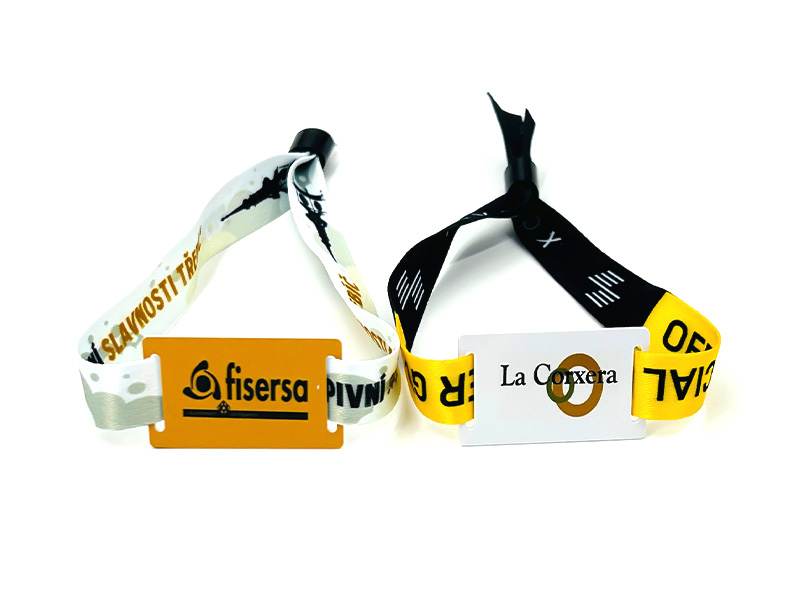
Welcome To HuiXin IOT : Pioneering RFID Solutions for a Connected World!
RFID (Radio Frequency Identification) tags are devices that utilize wireless radio frequency signals for automatic identification. Comprising a microchip and an antenna, they can store data and communicate wirelessly with RFID readers. The widespread application of RFID tags has made them a core component of modern smart technology, extensively used in logistics management, warehouse monitoring, traffic control, identity recognition, and more.
Compared to traditional barcodes, RFID tags offer greater durability, larger storage capacity, and the advantage of being readable without direct contact. With the development of the Internet of Things (IoT), RFID technology is driving intelligent management and automation processes, significantly enhancing operational efficiency across various industries.
How RFID Tags Work
The core working principle of RFID tags is based on radio wave communication. The system typically consists of three main components:
RFID Tag (Tag): Composed of an antenna and a microchip, it stores information and communicates wirelessly with the RFID reader.
RFID Reader (Reader): Emits radio waves to power the RFID tag and receives and decodes data from the tag.
Backend Database System: Stores and manages data transmitted by RFID tags, often integrated with enterprise information systems.
Working Process of RFID Tags
1.Wireless Powering: For passive RFID tags, the RFID reader emits radio waves at a certain frequency to provide energy to the tag's chip, enabling it to function.
2.Data Transmission: Once the chip inside the RFID tag receives electromagnetic energy, it begins transmitting stored information to the reader.
3.Data Parsing: The reader receives the signal and transfers the information to a computer or database for processing, completing tasks such as identity recognition or data recording.
The reading distance of RFID tags depends on their operating frequency, tag type, and application environment. For example, low-frequency (LF) tags typically have a reading range of a few centimeters, while ultra-high-frequency (UHF) tags can reach several meters or even tens of meters.
Main Types of RFID Tags and Their Uses
1. RFID Warehouse Tags
Application: Commonly used in inventory tracking, automatic stocktaking, and in/out management to improve accuracy and efficiency in warehouse management.
info-1-1
Features:
(1).Large storage capacity: Can record batch numbers, production dates, storage locations, etc.
(2)Long reading distance: UHF RFID tags are suitable for warehouse environments, enabling batch scanning over several meters.
(3)High durability: Industrial-grade RFID tags are often made of waterproof, dustproof, and high-temperature-resistant materials, suitable for complex warehouse environments.
Use Cases:
Logistics and warehousing
Manufacturing material tracking
Retail supply chain management
2. RFID Animal Ear Tags
Application: Used in livestock farming, animal identification, disease monitoring, and traceability to ensure animal information is traceable.
info-1-1
Features:
(1)Low-frequency (LF, 125kHz-134kHz) technology, stable in liquid environments and unaffected by animal fluids.
(2)Waterproof, dustproof, and corrosion-resistant, suitable for long-term wear.
(3)Unique ID numbers for recording health status, vaccinations, and movements.
Use Cases:
Farm management
Pet identification (e.g., pet microchips)
Wildlife tracking and research
3. RFID Coin Tags
Application: Coin-shaped RFID tags widely used in electronic payments, access control systems, and membership management.
info-1-1
Features:
(1)Compact design, embeddable in smart Cards, keychains, or bracelets.
(2)High-frequency (HF, 13.56MHz) or UHF technology, suitable for short-range payments and identification.
(3)Wear-resistant and durable, ideal for high-frequency use.
Use Cases:
Transportation Cards (buses, subways)
Membership and payment Cards (gyms, amusement parks)
Access control and parking management
4. RFID Sticker Tags
Application: Flexible, adhesive RFID tags used in retail product management, asset tracking, and anti-counterfeiting.
info-1-1
Features:
(1)Low-cost, mass-producible, suitable for one-time use.
(2)Can be directly attached to product surfaces without affecting appearance.
(3)UHF technology enables simultaneous scanning of multiple items, improving checkout efficiency.
Use Cases:
Apparel retail (e.g., Zara, Uniqlo use RFID for inventory management)
Electronics anti-counterfeiting
Logistics and package tracking
5. RFID Laundry Tags
Application: Widely used in the laundry industry to track linens, manage washing processes, and automate billing, improving laundry facility efficiency.
info-1-1
Features:
(1)Heat-resistant, waterproof, and chemical-resistant, suitable for high-temperature washing and ironing.
(2)HF or UHF technology for batch reading.
(3)Flexible or rigid designs for different fabric types.
Use Cases:
Hotel and hospital linen management
Industrial laundry automation
Workwear rental and tracking
6. RFID Patrol Point Management Tags
Application: Patrol management systems use RFID tags to record security or inspection personnel's routes and times, ensuring patrols are conducted as planned.
info-1-1
Features:
(1)Fixed at patrol points to record check-ins.
(2)LF or HF technology for short-range identification.
(3)Weather-resistant, suitable for outdoor environments.
Use Cases:
Property patrol management
Factory safety inspections
Equipment maintenance checks
Advantages of RFID Tags
What are some of the main advantages of using RFID tags:
Increased efficiency: RFID tags can be read quickly and accurately, allowing for faster and more efficient tracking of items.
Improved accuracy: Unlike barcodes, RFID tags do not require a direct line of sight to be read, which means they can be read even when hidden or obscured.
Reduced labor costs: RFID tags can be read automatically, eliminating the need for manual scanning and reducing labor costs.
Enhanced security: RFID tags can be encrypted and programmed with unique identifiers, making it more difficult for counterfeit or unauthorized items to enter the supply chain.
Real-time tracking: RFID tags can provide real-time data on the location and movement of items, allowing for better inventory management and supply chain optimization.
Durability: RFID tags are typically more durable than barcodes, which can become damaged or unreadable over time.
Overall, the use of RFID tags can provide numerous benefits for businesses and organizations looking to improve their supply chain management and inventory tracking processes.
Disadvantages of RFID Tags
Despite their advantages, RFID tags are not ideal for all tracking needs due to several security and technical issues.
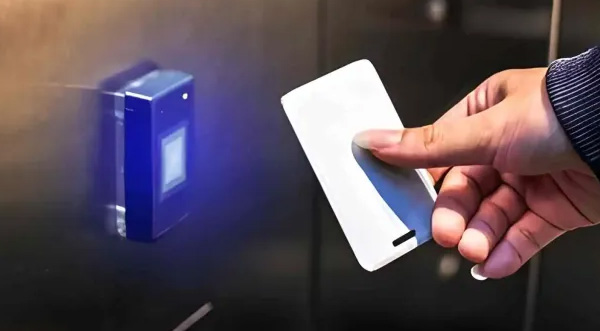
Security Concerns:
RFID tags cannot distinguish between readers, meaning almost anyone can read the information once it leaves the original supply chain.
Portable RFID readers and the wide range of some tags make it easy for scammers to collect potentially sensitive information without consent.
RFID tags linked to personal credit Cards raise concerns about financial theft and fraud.
Technical Issues:
Lack of global or industry standards for RFID tags.
Susceptibility to interference or disruption due to radio frequency operation, leading to longer wait times and reduced productivity in retail and warehouse environments.
Signal problems, including collisions (overlapping signals from multiple readers) and interference from metals, water, or other magnetic fields.
Setup Challenges:
Establishing RFID systems is time-consuming and labor-intensive, requiring extensive testing of hardware and tag systems to determine the most suitable setup.
High costs associated with RFID tags, scanners, and increased labor and time investment.
These drawbacks often make barcodes a more attractive option for data collection and inventory control in many businesses.
Conclusion
As an advanced automatic identification technology, RFID tags have gained widespread adoption across multiple industries due to their non-contact identification, long-range reading, and efficient management capabilities. Although challenges such as cost and signal interference remain, ongoing technological advancements will further enhance the role of RFID tags in logistics, retail, transportation, healthcare, and more. In the future, integrating RFID with IoT, artificial intelligence, and blockchain technology will elevate intelligent management levels, enabling more efficient data tracking and information management.