Welcome To HuiXin IOT : Pioneering RFID Solutions for a Connected World!
Imagine carrying just one card that allows you to make payments, unlock doors, use public transportation, and even manage your health information. In today's fast-paced digital world, we constantly seek ways to simplify life and enhance efficiency. RFID (Radio Frequency Identification) technology, a seemingly inconspicuous yet powerful tool, is quietly transforming our daily routines.
The Technology Behind Cards/" target="_blank"> RFID Cards/" target="_blank">Cards
1. How RFID Works
The working principle of RFID technology is not complex. It primarily consists of the following components:
RFID Tag: The core component of an RFID system, consisting of a chip and an antenna. The chip stores data, while the antenna transmits and receives radio waves.
RFID Reader: Reads and writes data stored in RFID tags. It emits radio waves to power the RFID tag and receives data transmitted back by the tag.
Antenna: Facilitates wireless communication between the RFID tag and the reader.
When an RFID tag enters the reader's range, the reader emits radio waves to power and activate the tag. The RFID tag then transmits the stored data back via its antenna. The reader decodes the data and sends it to a computer system for processing.
2. Types of Cards/" target="_blank"> RFID Cards/" target="_blank">Cards
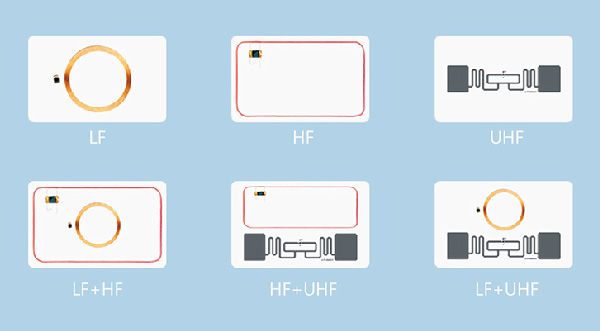
RFID Cards are categorized based on their operating frequency:
Low-Frequency (LF) Cards/" target="_blank"> RFID Cards/" target="_blank">Cards: Operate at 125 kHz or 134.2 kHz, with a short reading distance ranging from a few centimeters to several dozen centimeters. Commonly used for access control and animal identification.
High-Frequency (HF) Cards/" target="_blank"> RFID Cards/" target="_blank">Cards: Operate at 13.56 MHz, with a reading range of about 1 meter. Widely used in contactless payments and public transportation.
Ultra-High-Frequency (UHF) Cards/" target="_blank"> RFID Cards/" target="_blank">Cards: Operate between 860 MHz and 960 MHz, offering reading distances of several meters or more. Frequently used for logistics and inventory management.
Security Concerns of Cards/" target="_blank"> RFID Cards/" target="_blank">Cards
With the widespread adoption of RFID technology, security concerns have become increasingly significant. The primary risks associated with RFID Cards include:
Data Breach: RFID card data may be read by unauthorized readers, leading to data leaks.
Data Tampering: Malicious actors may alter RFID card data, causing security issues.
Privacy Invasion: Personal information stored in RFID Cards could be exposed, leading to privacy risks.
Solutions to Enhance RFID Security
To address these security concerns, the following measures can be implemented:
Encryption: Encrypting RFID card data prevents unauthorized access and tampering.
Access Control: Restricting RFID reader access ensures that only authorized devices can read card data.
Privacy Protection: Employing privacy safeguards, such as data masking, helps protect personal information.
Cards/" target="_blank"> RFID Cards/" target="_blank">Cards: The Key to a Convenient Life
An RFID card is embedded with a microchip and antenna, allowing it to communicate wirelessly with RFID readers. This seemingly simple technology enables a wide range of applications, including:
1. Contactless Payments: A Faster, Safer Way to Pay
Imagine shopping at a crowded supermarket and skipping the hassle of searching for cash or a credit card. With a quick tap of your RFID card, you can complete your payment instantly. Contactless payments not only save time but also reduce physical contact, enhancing safety and hygiene.
2. Smart Access Control: Say Goodbye to Traditional Keys
Forget about losing keys or forgetting passwords! RFID Cards serve as smart keys, granting access to homes, offices, and even hotel rooms. Simply tap the card against the reader to unlock doors seamlessly and enjoy a hassle-free experience.
3. Seamless Public Transportation: Effortless Commuting
RFID Cards make urban commuting more efficient. Whether taking the subway, bus, or renting a bike, a single RFID card enables easy access, eliminating the need to queue for tickets and streamlining the travel experience.
4. Event Management: Enhancing Efficiency
From music festivals to corporate events, RFID Cards revolutionize event management. wristbands" target="_blank" style="margin: 0px; padding: 0px; color: rgb(0, 122, 255); text-decoration-line: none;"> wristbands wristbands" target="_blank" style="margin: 0px; padding: 0px; color: rgb(0, 122, 255); text-decoration-line: none;"> wristbands wristbands" target="_blank" style="margin: 0px; padding: 0px; color: rgb(0, 122, 255); text-decoration-line: none;"> wristbands wristbands" target="_blank" style="margin: 0px; padding: 0px; color: rgb(0, 122, 255); text-decoration-line: none;"> wristbandss" target="_blank" style="margin: 0px; padding: 0px; color: rgb(0, 122, 255); text-decoration-line: none;"> RFID wristbands" target="_blank" style="margin: 0px; padding: 0px; color: rgb(0, 122, 255); text-decoration-line: none;"> wristbandss or Cards enable fast check-ins, cashless transactions, and crowd monitoring, ensuring a smooth and enjoyable experience for attendees.
5. Inventory Management: Boosting Business Productivity
For businesses, RFID technology is a game-changer in inventory management. By tagging products with RFID labels, companies can achieve real-time tracking, quick stock-taking, and anti-counterfeiting measures, reducing costs and improving operational efficiency.
Advantages of Cards/" target="_blank"> RFID Cards/" target="_blank">Cards: Convenience, Security, and Reliability
RFID Cards offer several benefits, making them an ideal choice for simplifying our lives:
Fast and Convenient: RFID Cards enable quick, simple, and contactless transactions, significantly streamlining daily activities.
Secure and Reliable: Advanced encryption protects user information and transaction data, ensuring security.
Durable and Long-Lasting: RFID Cards are made from high-quality materials, resistant to wear and corrosion, ensuring a long lifespan.
Versatile Applications: From payments and access control to transportation and logistics, RFID Cards cater to a wide range of needs.
The Future of Cards/" target="_blank"> RFID Cards/" target="_blank">Cards: Endless Possibilities
As technology continues to evolve, the potential of RFID Cards is limitless. We can expect to see more innovative applications in the coming years, such as:
1. Deeper Integration with Smartphones
RFID Cards can seamlessly integrate with smartphones, offering a more convenient and personalized experience. Users can manage RFID Cards, view transaction histories, and even remotely lock or unlock their Cards using mobile apps.
2. Empowering Smart Healthcare
RFID Cards can store patients' medical records, prescriptions, and allergy information, enabling more efficient and accurate healthcare services.
3. Building Smarter Cities
RFID technology will contribute to smarter and more efficient urban management, optimizing traffic flow, improving waste collection, and delivering personalized city services.