Welcome To HuiXin IIOT : Pioneering RFID Solutions for a Connected World!

Driven by the development of modern technology, RFID (Radio Frequency Identification) technology is being widely used in various industries. Especially in large events, amusement parks, hotels, medical institutions and other places, RFID bracelets have become an ideal identification and management tool by virtue of their convenient, efficient and safe characteristics. Compared with traditional tickets and barcode identification, RFID bracelets not only provide fast admission, cashless payment, data tracking and other functions, but also enhance user experience and management efficiency. So how exactly does RFID bracelets work? How does it differ from other identification technologies? Next, we will explore the basic principles, application scenarios and advantages of RFID bracelets.

What is RFID technology?
RFID stands for Radio Frequency Identification, but what exactly is it?
RFID (Radio Frequency Identification) is a technology that transmits and identifies data through radio waves. It allows information to be read without contact, making operations such as identity verification, inventory management, and access control more efficient.
A complete RFID system usually consists of tag (Tag), reader (Reader) and backend database (Backend System). According to different power supply methods and frequencies, RFID systems can be divided into the following categories:
1. Categorized by power supply:
Passive RFID: no battery, relying on the reader's wireless signal power supply, reading range is usually a few centimeters to one meter, widely used in access control, ticketing systems.
Active RFID: built-in battery, can actively send signals, reading range of up to tens of meters, applicable to vehicle management, asset tracking and other scenarios.
Semi-active RFID: activate the power supply when close to the reader, combining the characteristics of passive and active RFID.
2. Categorized by operating frequency:
Low Frequency (LF, 125-134kHz): suitable for animal identification, access control system, shorter reading range.
High frequency (HF, 13.56MHz): for payment, ticket management, etc., with better anti-interference ability.
Ultra High Frequency (UHF, 860-960MHz): for warehousing and logistics, supply chain management, reading range is farther.
What happens when the RFID bracelet is scanned?
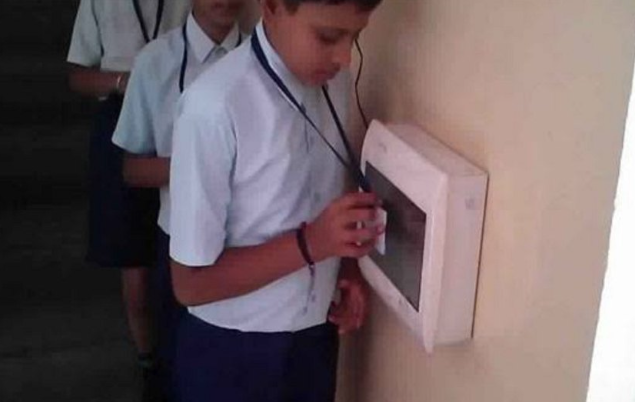
There is a chip and antenna embedded inside the RFID bracelet. When the bracelet is close to the RFID reader, the reader will send a radio signal to activate the chip, read the data stored in it, and transmit the information to the backend system. When the RFID bracelet is read (or "swiped"), the RFID scanner sends a coded radio signal to identify the tag. In less than a millisecond, the RFID tag receives the signal and responds with a unique identification number, which is captured and processed by the RFID reader, which performs the appropriate action depending on the application scenario, for example:
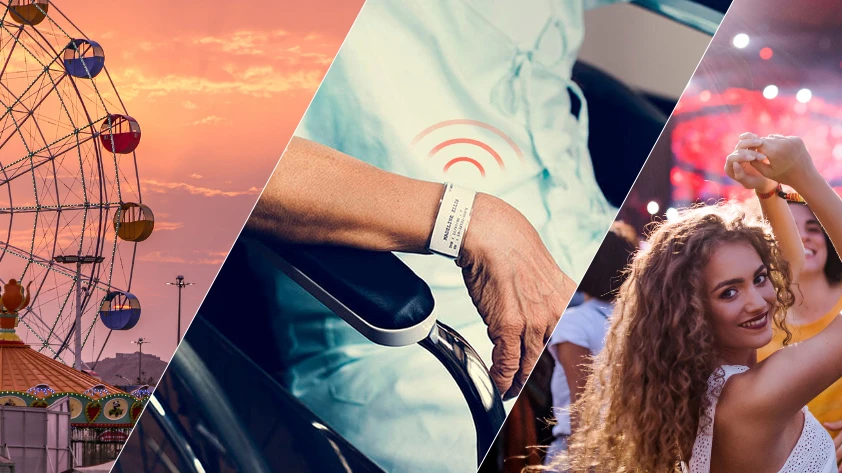
At music festivals or amusement parks, users wearing RFID bracelets can validate their entry with a simple swipe.
In hotels, residents can use RFID bracelets to unlock their room doors and even bind payment functions to realize cashless consumption.
The entire reading process is completed in a few milliseconds, which significantly improves access and payment efficiency.
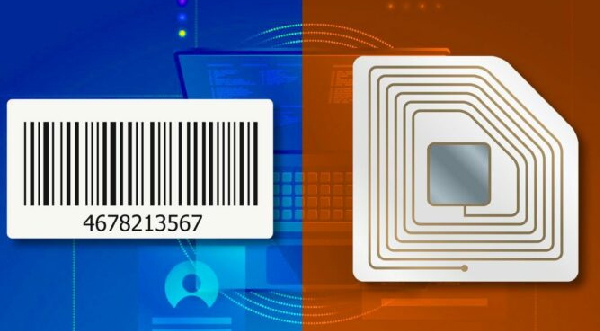
What is the difference between an RFID bracelet and a barcode?
The simplest everyday analogy is the bar code on a canned beverage. When the barcode is scanned, it communicates with a database that unlocks information about the beverage such as product name, price, weight and shelf life.
But an RFID bracelet is completely different from a barcode bracelet, and while they both capture data through scanning, that's about as far as the similarities go.
Here are the main differences between the two:
Features
RFID bracelet
Barcode
Reading method
Non-contact remote reading.
Requires proximity scanning.
Scanning speed
Thousands of tags can be read in minutes, fast and efficient.
Can only read one bar code at a time.
Line of sight requirements
No alignment required, tags can be read regardless of orientation as long as they are within reading range.
Alignment Required The scanner must see the barcode and scan in a specific orientation.
Stored information
Can store a variety of data (identity,payment,permissions, etc.)
Contains only simple encoded information
Security
High. RFID is difficult to duplicate, tags and the databases they access can be encrypted and password protected.
Low. Easily copied, imitated and counterfeited.
Durability
High. RFID antennas can be embedded in waterproof, heat and impact resistant materials.
Low. Easily copied, imitated, and counterfeited.
Internal structure of RFID bracelet
RFID bracelet usually consists of the following parts:
RFID chip (Tag): to store identity information, payment data, rights management and other information.
Antenna: Used to receive and send wireless signals to communicate with the reader.
Wristband Material: According to the usage requirements, RFID Wristband can be made of silicone, fabric or disposable plastic, etc.
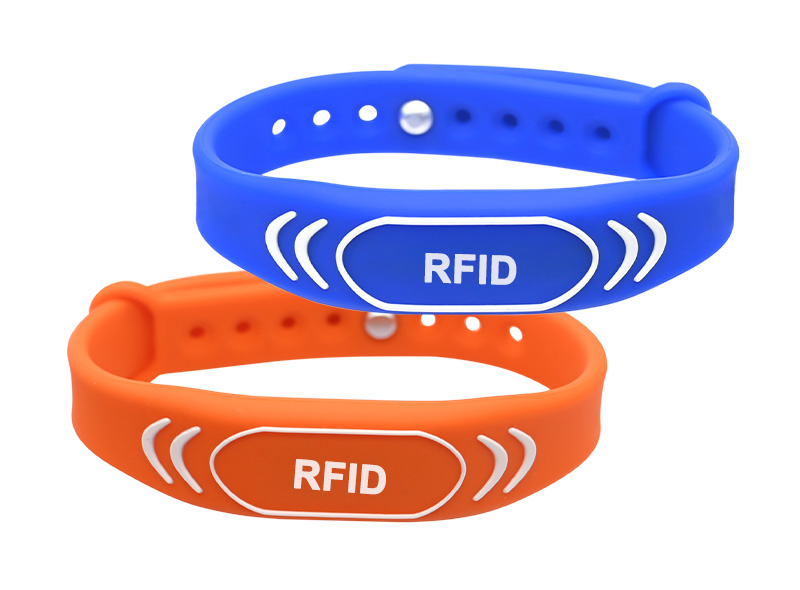
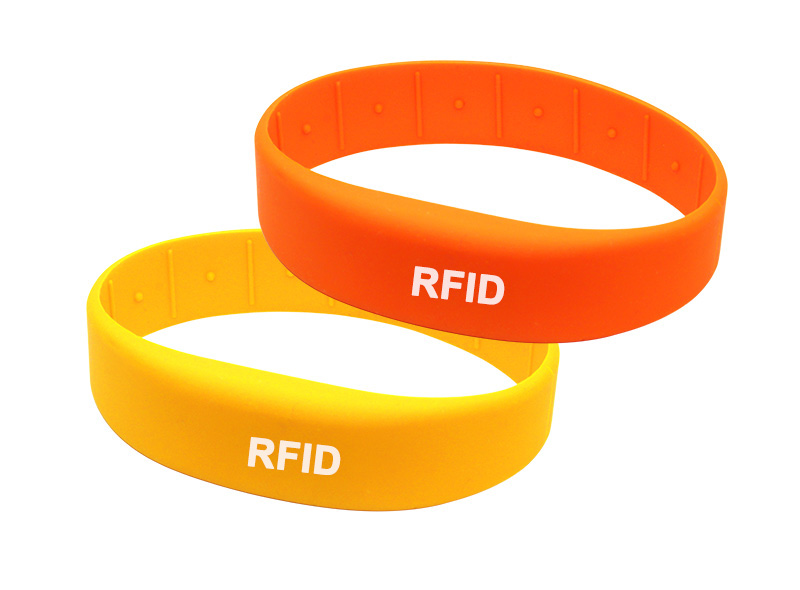
RFID Silicone Wristband
info-1-1
Soft and durable, waterproof and dustproof, suitable for swimming pools, water parks and other long-term use scenarios.
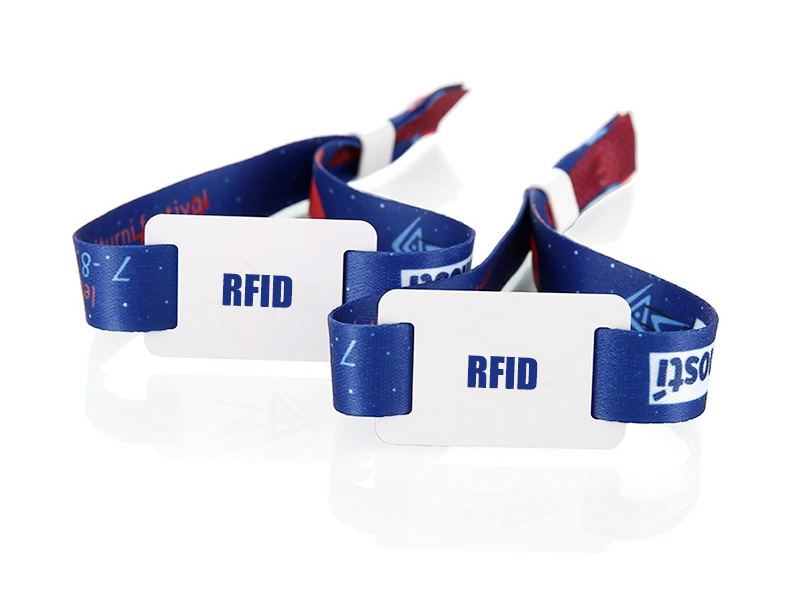
RFID Fabric Wristband
info-1-1
Breathable and comfortable, suitable for events such as music festivals, conferences, etc. with personalized printing.
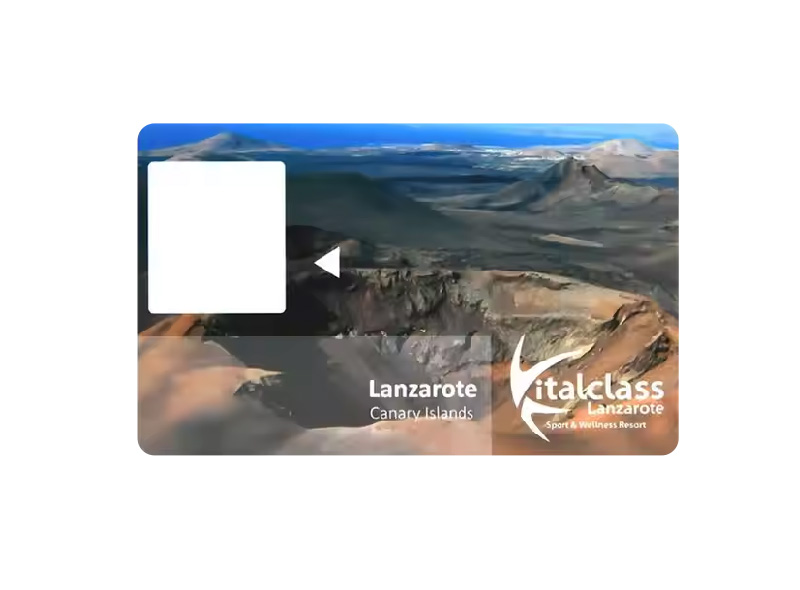
RFID Disposable Wristband
info-1-1
Low cost, non-removable, suitable for short-term events such as exhibitions, sports events, etc.
How much data can be stored in an RFID wristband?
RFID tags can store everything from identity credentials, payment points, coupons, access to hotels or VIP areas, and even social media information.
LF/HF RFID: Storage capacity is usually 2-3 KB, suitable for identification, access control management.
Ultra High Frequency RFID (UHF): can store up to 8 KB of data, suitable for more complex management systems.
What data can RFID bracelets collect?
RFID bracelets can not only store information, but can also be used for data collection, for example:
Entry and exit times of visitors
Tracks of users' movements within the venue
Traffic analysis of popular areas
Purchasing behavior (consumption habits, payment methods, etc.)
This data can help companies optimize operational strategies and improve user experience
Can RFID bracelets be used as tracking devices?
Most RFID bracelets use high-frequency passive tags that only support short-range communication, so they cannot be used to track the wearer's location in real time. However, they can record the last scanned position and are suitable for:
Personnel management at large events, such as locating where people were last seen in an emergency.
Child loss prevention, such as amusement parks to help parents check the last active location of their children.
Medical institutions, used to record the patient's action track to improve management efficiency.
RFID Wristband Applications
RFID technology not only simplifies the admission process, but also allows visitors to enjoy a more convenient experience.
Ticket holders don't need to carry wallets, tickets or personal information to participate in events and enjoy uninhibited fun.
More and more industries are benefiting from the use of RFID technology, so feel free to contact us to learn how we can optimize your event experience.
RFID bracelets are used in a wide range of industries:
Events & Entertainment (music festivals, sporting events, exhibitions)
Hotels & Resorts (keyless room unlocking, automatic checkout)
Amusement & Waterparks (fast passes, cashless payments)
Healthcare (patient identification, medication management)
Business Management (employee attendance, access control systems)

Plus regular updates, exclusive discounts and the latest product news!