Welcome To HuiXin IOT : Pioneering RFID Solutions for a Connected World!
Radio Frequency Identification ( RFID) is a communication technology that uses radio signals to identify specific targets while reading and writing relevant data, without the need to establish mechanical or optical contact between the identification system and the specific targets. The radio signal is transmitted through an electromagnetic field tuned to radio frequency to automatically identify and track an item by attaching data to a tag attached to the item. Unlike barcodes, radio frequency tags can be embedded within the tracked object.
Recently, many logistics and delivery companies have pointed out that using RFID technology is a 'very important thing'. Due to the special delivery requirements of some customers, the advantages of using RFID in meeting these special delivery requirements have emerged. Some logistics companies have first adopted RFID logistics delivery technology, which can give them an advantage in competition with other enterprises.
system function
The RFID warehouse logistics management system enables intelligent and information-based management of enterprise logistics goods, achieving functions such as automatic sending of delivery demand information, real-time tracking of goods delivery status, automatic recording of goods storage information, automatic system alarm, and real-time integration with WMS system. The system flowchart is shown in the following figure.
Performance characteristics
1) The system relies on the advantages of RFID technology to achieve remote collection of product information
2) The technological advantage of using RFID to collect real-time information from various job processes ensures that enterprises can timely and accurately grasp inventory status;
3) By using a warehouse reader to collect data on goods, the system can achieve management to prevent cross shipment;
4) When the delivery exceeds the required time, the system automatically sends an alarm reminder to prevent the production line from stopping;
5) The system software platform adopts an open platform architecture, which can be well integrated with enterprise ERP, SAP, and WMS systems.
So, what are the applications and benefits of wireless radio frequency identification technology in the logistics industry? In the retail industry, RFID can improve inventory management for retailers, achieve timely replenishment, effectively track transportation and inventory, improve efficiency, and reduce errors. Meanwhile, smart tags can monitor certain time sensitive products within their expiration dates; The store can also use RFID systems to achieve automatic scanning and billing at the payment counter. RFID tags in the sales process of supply chain terminals, especially in supermarkets, eliminate manual intervention in the tracking process and enable 100% accuracy of generated business data.
In the warehousing process, RFID technology is most widely used for accessing goods and inventory counting in warehouses, automating inventory and pickup operations. By integrating RFID technology with the supply chain planning system, plans for receiving, picking up, and shipping have been developed. This not only enhances the accuracy and speed of operations, improves service quality, reduces costs, saves labor and inventory space, but also reduces losses caused by product misplacement, delivery errors, theft, damage, inventory and shipping errors throughout the entire logistics process The RFID system is used for intelligent warehouse goods management, and RFID effectively solves the management of information related to the flow of goods in the warehouse.
In the transportation process and management, RFID tags are affixed to goods and vehicles in transit, and RFID receiving and forwarding devices are installed at some checkpoints along the transportation line. In this way, after receiving the RFID tag information in the receiving device, it is uploaded to the communication satellite along with the location information of the receiving location, and then transmitted to the transportation dispatch center by the satellite and sent to the database.
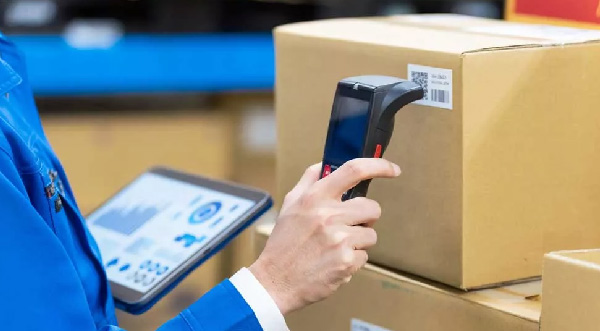
In the logistics distribution process, the use of radio frequency technology can greatly accelerate the speed of delivery, improve the efficiency and accuracy of picking and distribution processes, and reduce labor and delivery costs. The system will verify the information read with the shipping records, detect any possible errors, and then update the RFID tag to the latest storage location and status of the goods. Inventory control is precisely managed, and even information such as how many containers are currently in transit, the origin and destination of the transit, and the expected arrival time can be accurately understood.