Welcome To HuiXin IOT : Pioneering RFID Solutions for a Connected World!
In the wave of digital transformation, RFID (Radio Frequency Identification) technology has become one of the core drivers of retail innovation. From inventory management to consumer experience optimization, RFID is reshaping global retail operations with its efficiency, precision and scalability. RFID in retail is rapidly changing the landscape. By utilizing radio waves to track products in real time, RFID allows retailers to better understand inventory, streamline operations and facilitate the supply chain. With the growing demand for accurate inventory levels and a seamless shopping experience, RFID has gone from "icing on the cake" to a must-have tool for the modern retailer.
In this article, we'll cover what RFID is, how it works, the benefits it provides, and examples of how it's transforming retail operations.
What is RFID in Retail?
RFID is a contactless technology that automatically identifies and transmits data via infinite airwaves between a tag and a reader.
In retail, RFID tags are small, inexpensive chips embedded in product labels or plastic tags. These tags contain product details, such as number, size and color, and allow for real-time tracking of merchandise as it moves through the supply chain or on store shelves.
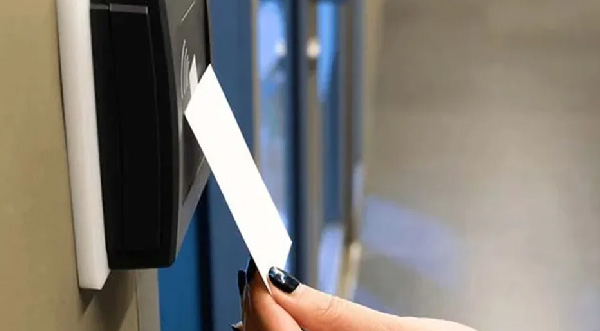
Unlike barcodes, which require line-of-sight scanning, RFID tags can be read without direct contact, making inventory management faster and more efficient.The use of RFID in retail is not limited to products: it's also used for employee badges and other applications that require secure identification.
How RFID works in retail?
RFID is mainly composed of tags, readers and antennas. RFID tags are small chips with embedded data, while RFID readers emit infinite radio waves to detect and capture information from these tags. When an item with an RFID tag passes through a reader, the reader captures real-time data on inventory levels, sales volume and product location. Unlike bar codes, which must be scanned individually, RFID readers can scan hundreds or even thousands of tags at a time.
Retail efficiency is driven specifically through these core features:
Real-time inventory management
RFID can scan products in batches and complete store-wide inventory counts in seconds, with an error rate of less than 0.1%. ZARA's RFID system automatically updates inventory data in stores worldwide on a daily basis, ensuring that head office has a real-time view of what's going on in sales.
Supply Chain Transparency
From the logistics center to the store, RFID tracks the flow of goods. For example, ZARA's Spanish headquarters monitors global logistics nodes via RFID, ensuring that garments go from design to store shelves in just 10-15 days.
Enhanced Consumer Experience
RFID reduces queuing time and improves shopping convenience through smart fitting rooms, self-checkout, etc. The self-service kiosks and selfie pods at ZARA's Nanjing flagship store rely on RFID to realize fast interaction.
For retailers, integrating RFID systems with inventory can greatly improve operational efficiency. RFID helps improve inventory accuracy and visibility, providing a seamless shopping experience for today's omni-channel consumers, both in-store and online.
RFID in the Retail Industry
RFID technology is becoming increasingly important to retailers around the world, and RFID applications are becoming more widespread. Below are the key retail applications of RFID technology.
Better Inventory Tracking
With RFID tags, retailers can monitor the location and status of each item in real time, allowing for more accurate inventory management. Employees are able to instantly know when items are understocked or out of stock and take quick action to replenish them. This visibility not only improves supply chain efficiency, but also ensures that best-selling items are always in stock, resulting in increased customer satisfaction.
Customer Behavior Insight
RFID tracks the movement of merchandise through the store, helping retailers analyze which areas are the most popular and which items are frequently tried on by customers but not purchased. By understanding where foot traffic is concentrated and where hot items are placed, retailers can optimize store layout, increase product exposure, and adjust promotional strategies to boost sales.
Easy order fulfillment
RFID technology facilitates the O2O (order online, pick up in store) model to ensure more efficient order fulfillment. Retailers can use RFID tags to track merchandise in warehouses, stores, and distribution centers, making "Buy Online, Pickup in Store (BOPIS)" or "Same Day Delivery" smoother. Whether it is order picking or inventory allocation, RFID can accurately guide and improve the speed of order processing.
Contactless Checkout
RFID makes the checkout process more convenient and efficient. Customers only need to bring goods through the RFID induction area, the system can automatically identify and complete the billing, without the need to manually scan the code. This contactless payment significantly reduces queuing time and enhances the shopping experience. RFID can also be integrated with membership systems to provide customers with personalized recommendations and discounts, further enhancing sales conversion rates.
Intelligent anti-theft and security management
RFID technology provides retailers with more efficient anti-theft and asset tracking capabilities. With a unique RFID tag attached to each item, the system can automatically trigger an alert if the item is not checked out. In addition, RFID can be used for employee rights management to ensure that high-value merchandise is only accessed by authorized personnel, reducing the risk of internal theft.
Accurate Temperature Monitoring
For the sale of fresh food, refrigerated medicines and other commodities that require specific storage temperatures, RFID can be combined with temperature sensors to realize full temperature monitoring. If the temperature of the refrigerated environment is abnormal, the system will automatically alarm to prevent food spoilage or medicine failure. This not only improves food safety, but also reduces the loss of goods due to improper temperature control.
Improve inventory count accuracy
While traditional inventory counts rely on manual operations, which are error-prone and time-consuming, RFID technology enables retailers to scan hundreds of items simultaneously without scanning barcodes one by one, dramatically improving the efficiency of inventory counts. In addition, RFID inventory counts automatically update inventory data, reducing human error and improving overall inventory accuracy.
This improvement increases inventory visibility, reduces wastage, minimizes out-of-stock situations, and ultimately increases sales and customer satisfaction.
Why is RFID so popular in retail?
RFID technology is very popular among retailers because it helps solve common problems with inventory tracking. In the past, retailers have had to rely on manual counting and barcode scanning, which can lead to errors, slow replenishment and lost sales.
With RFID tags on products, staff can quickly scan large quantities of stock without having to have a direct line of sight, and technologies such as RFID inventory management systems have made their day-to-day work much easier.
On the shop floor, RFID readers can help track the movement of products, so retailers can quickly see which items need to be restocked. While RFID systems are costly to set up, the benefits, such as faster and more accurate inventory management, make them a smart investment for retailers. We'll take a closer look at the benefits of RFID in retail stores in the next section.
Six Core Benefits of RFID in Retail
1. Solving Traditional Inventory Management Problems and Reducing Errors and Losses
In the past, retailers relied on manual inventory counts and barcode scanning for inventory management, which had many problems, such as manual errors, lagging inventory data, delays in replenishment, and could even lead to lost sales.
The introduction of RFID technology has made inventory management more efficient and accurate. With the help of RFID tags, employees can scan goods in bulk instead of scanning barcodes one by one, dramatically reducing human error and ensuring the accuracy and real-time availability of inventory data.
2. Improve inventory management efficiency and reduce employee workload
RFID tags allow bulk scanning of merchandise over long distances, eliminating the need for retail employees to scan or visually inspect inventory one by one, dramatically improving work efficiency. For example, a one-time inventory of all inventory in a large store, which previously could take hours or even days, can be completed in minutes with RFID.
According to industry data, 55% of retail employees report that RFID inventory management technology has made their daily work easier. Reducing repetitive manual operations allows employees to focus on improving customer service and optimizing store operations.
3. Realize real-time inventory visibility and fast replenishment
In retail stores, out-of-stock is one of the main factors affecting sales. When best-selling products are sold out, retailers often find it difficult to find and replenish the stock in time, resulting in loss of customers.
RFID readers can monitor shelf inventory in real time, and when an item's inventory falls below a safe threshold, the system will automatically notify employees to replenish it. In addition, RFID can also help retailers understand which goods move the fastest, so as to optimize the supply chain and inventory configuration, to ensure that high-demand goods are always available.
4. Enabling contactless shopping and enhancing customer experience
With the rise of self-service shopping and contactless payment, RFID technology plays an important role in accelerating checkout and enhancing the customer experience.
Customers in the self-service checkout, just put the shopping basket on the RFID scanning area, the system can automatically identify all the goods, no need to manually sweep the code, greatly reducing the checkout time.
Combined with mobile payment, customers can complete the payment directly without waiting in long lines, enhancing the shopping experience.
RFID can also be used for intelligent fitting room, customers try on clothes, the system can automatically identify the goods, and provide recommended matching, inventory inquiries and other personalized services.
5. Prevent theft and internal loss, improve security
Retailers due to theft and inventory losses caused by the loss of up to billions of dollars a year. RFID technology can be used to prevent theft of goods, improve security:
Each item is tagged with a unique RFID label, and if an item is taken out of the store without being checked out, the RFID access control system triggers an automatic alarm.
RFID can also be used for internal management to ensure that high-value goods (e.g. electronics, luxury goods) can only be accessed by authorized personnel, reducing the risk of internal theft.
6. Long-term cost savings and high return on investment
Despite the high initial installation cost of an RFID system, the benefits it brings in terms of inventory management optimization, improved efficiency, and increased sales make it an investment with a very high long-term return.
By reducing inventory count costs and increasing sales conversion rates, RFID is able to pay back in 1 to 2 years.
Many retail giants, such as ZARA, Uniqlo, Decathlon, have fully deployed RFID systems and have gained significant benefits such as faster inventory turnover, increased sales, and decreased operating costs.
info-1-1
Case Study: ZARA's RFID Practices
Self-checkouts have undoubtedly changed the way we shop, but they often still require human intervention, which can undermine the convenience they are meant to provide. zara recognized this challenge and turned it into an opportunity to redefine the in-store shopping experience.
How does ZARA self-checkout work?
With ZARA's self-checkout system, customers simply place items into the machine's bins without scanning individual barcodes. Each item is tagged with an RFID clothing label, and the self-checkout machine's RFID reader accurately detects and records the price of all items in the bin.
For shoppers, this integration streamlines the checkout process, eliminating the need for manual scanning and providing a relaxing experience.ZARA can utilize the information from these RFID self-checkout kiosks to enhance inventory management and easily manage promotions and price changes.
ZARA and the Business Value of RFID in Retail
ZARA has realized intelligent upgrading of its supply chain and inventory management through RFID technology, significantly improving operational efficiency and market competitiveness. RFID tags enable ZARA to track the location of each item in real time, and accurately monitor inventory throughout the entire process from production, warehousing, to store sales, ensuring that best-selling items can be replenished quickly, reducing out-of-stock rates, and increasing the sales conversion rate. In addition, RFID allows ZARA to increase the speed of inventory counting by more than 80%. Employees do not need to scan barcodes one by one, but scan the entire shelf in bulk, reducing manual errors and optimizing labor costs. At the store end, RFID also supports contactless checkout and smart fitting rooms, enhancing the consumer shopping experience and promoting the development of O2O (online purchase, store pickup) mode. Despite the high initial investment in RFID, its business value of improving inventory turnover, reducing wastage and increasing sales has made it an important support for ZARA to realize an efficient supply chain for fast fashion, and has also provided a successful example for the digital transformation of the entire retail industry.
Cost of RFID implementation in retail
The initial setup cost of RFID depends on the number of readers and the number of items to be tagged; RFID systems are usually affordable and enough savings can be realized over time to cover the initial cost. More complex setups may take longer to pay for themselves.