Welcome To HuiXin IOT : Pioneering RFID Solutions for a Connected World!
I. Introduction
As the global digital transformation deepens, access control systems have evolved from a single physical protection tool to a core infrastructure that integrates IoT, biometrics and data security. According to ABI Research 2025 report, the global RFID and Smart Card access control market size is expected to exceed $12 billion in 2029, with a compound annual growth rate (CAGR) of 7.2%. China's market performance is particularly outstanding, 2024 RFID access card market size of 4.5 billion yuan, accounting for 32% of the global share, and in the smart city, financial IC card upgrades and the popularization of IoT terminals to promote the growth rate to lead the world.
As two mainstream technologies, RFID Keyfob and Smart Card dominate the market with low-cost convenience and high security and multifunctionality respectively. For example, the penetration rate of RFID key fobs in the hotel industry has exceeded 60% (2024 data), while the application scale of smart Cards in financial payment, digital identity authentication and other scenarios is growing at an average annual rate of 15%.
How to balance cost, security and scalability? We comprehensively dismantle it from technical principles to industry practices.
II. Technology Overview
RFID Keyfob
RFID Keyfob is a small portable device based on Radio Frequency Identification ( RFID) technology, usually with a built-in RFID chip and antenna that stores a unique identification code. When the key fob is close to the RFID reader, data exchange is accomplished through electromagnetic induction or radio waves, thus realizing identification or access control.
info-1-1
The identification process of RFID Keyfob usually includes the following steps:
1. Activation: RFID reader sends out a radio frequency signal to wake up the RFID chip in the key fob.
2. Data transmission: the key fob to the reader to return to the unique identification code (UID), some models support encrypted communication.
3. Permission Verification: The backend system compares the UID and decides whether to grant access rights.
Common types
RFID key fobs can be categorized into the following types according to the operating frequency:
1. Low Frequency (LF) RFID Keyfob (125kHz)
Uses passive RFID and requires no built-in power supply.The transmission range is usually 1-10cm, suitable for short distance identification.
Advantages: low cost, high compatibility, suitable for access control system and attendance management.
Disadvantages: lower security, easy to be cloned.
2. High Frequency (HF) RFID Keyfob (13.56MHz)
Uses NFC or ISO 14443 protocol and supports encrypted authentication.The transmission range is usually within 10 centimeters and the data transmission rate is high.
Advantages: supports encryption, high security, can be used for payment and access control.
Disadvantages: slightly higher cost than low-frequency RFID, but more secure.
3. Ultra High Frequency (UHF) RFID Keyfob (860-960MHz)
Uses long range passive RFID technology with a read range of up to several meters.
Advantages: Suitable for remote identification, such as parking lot management, logistics tracking.
Disadvantages: susceptible to environmental interference (e.g. metal, water).
Typical Application Scenarios
RFID key fobs are widely used in access control management, identification and automation control, the following are the main application areas:
Office buildings: Employees can quickly enter the building or restricted areas through key fobs to improve the efficiency of access control management.
Residential neighborhoods: Owners use key fobs to control access control, improving security and convenience.
Hotels: Replacing traditional magnetic stripe room Cards, providing guests with more durable room keys.
Gymnasium: Members authenticate themselves with RFID key fobs, eliminating the need for manual sign-in.
Parking lot management: Combined with UHF RFID key fob, it realizes remote automatic gate opening and improves passage efficiency.
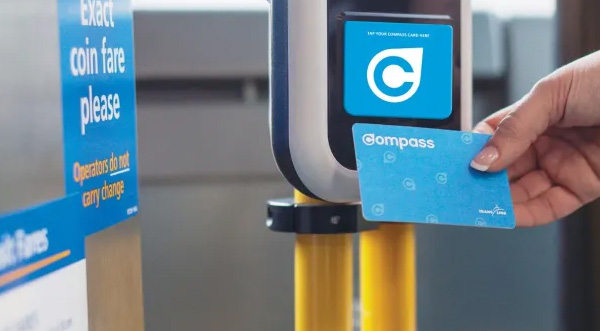
Smart Card is a plastic card integrated with a microprocessor chip or memory chip for identification, data storage and encrypted communication. According to the communication method, smart Cards can be divided into two categories: contact and non-contact.
info-1-1
Contact smart Cards: need to be inserted into a card reader and data exchange is carried out through physical contacts.
Contactless Smart Card: Based on RFID or NFC (Near Field Communication) technology, data can be transmitted via radio waves over a short distance.
The workflow of Smart Card is as follows:
1. Chip activation: the Smart Card is in contact with or close to the card reader to establish communication.
2. Data interaction: the card chip processes commands and can store personal identity information, payment data, etc.
3. Security verification: Based on the encryption algorithm and stored data, the system determines whether to grant privileges or execute transactions.
Technical Classification
1. Magnetic stripe card
· uses a magnetic stripe to store data and requires a card to be swiped to read the information.
· Typical applications: traditional bank Cards, access Cards, membership Cards, etc.
· Disadvantages: low security, susceptible to magnetic field interference, gradually replaced by IC Cards.
2. Contact IC card
· adopts ISO 7816 standard and needs to be inserted into the card reader for use.
· has a built-in microprocessor that performs authentication, data storage and encryption operations.
Typical applications of : bank card (EMV chip card), social security card, ID card and so on.
· Advantages: High security, suitable for data storage and identity authentication that requires encryption.
3. Contactless Smart Card (NFC card)
Adopts ISO 14443 standard, supports short-range wireless communication (usually <10cm).
Typical applications: bus and metro Cards (e.g. Shanghai Transportation Card, Hong Kong Octopus), access control Cards, cell phone payment (Apple Pay, Google Pay).
Advantages: no contact, easy to use, high security, long life.
Typical Application Scenarios
Due to its high security and multi-functionality, Smart Card is widely used in payment system, identity authentication and access control, the main scenarios include:
Enterprise access control: Advanced security level smart Cards support encryption and multiple identity authentication and are suitable for large enterprises and government organizations.
Public transportation: NFC smart Cards can be used for bus, subway, high-speed rail, etc. to realize convenient electronic payment.
Financial Payment: Chip bank Cards (e.g. EMV standard) significantly improve payment security and effectively reduce counterfeit card fraud.
Government identity authentication: such as electronic passport (ePassport), ID card, social security card, etc., to support encrypted identity authentication.
Medical industry: Smart health card stores patient information, realizes electronic medical record management, and improves medical efficiency.
III. Core Comparison Dimensions
Feature
RFID Keyfob
Security
Lower encryption, vulnerable to cloning.
Advanced encryption (AES), stronger resistance to attacks.
Cost and Deployment
Lower cost, but limited compatibility and higher long-term maintenance.
Higher initial cost, but supports multi-function integration (access + payment).
Durability and Portability
Compact and durable, but easy to lose.
More robust, but contact-based chips wear out over time.
Functionality
Limited to access control.
Multi-functional (access, data storage, digital signatures, etc.).
User Experience
Hands-free operation, very simple to use.
Requires direct contact with a reader, but intuitive
IV. Future Trends and Innovations
With the development of Internet of Things (IoT), Artificial Intelligence (AI) and security technologies, RFID key fobs and smart Cards are undergoing technological innovation to meet higher security needs, wider application scenarios and more environmentally friendly and sustainable development requirements.
Technology Convergence: The Upgrading of Smart Identity
Smart Cards and RFID key fobs are developing in the direction of greater intelligence and security, and future identification technology may no longer be limited to a single solution, but the fusion of multiple technologies.
Smart Card integration with biometrics: As biometrics technology matures, more and more smart Cards are beginning to integrate fingerprint recognition, facial recognition, iris scanning and other functions to provide a higher level of identity verification. For example, financial institutions and government departments have begun to adopt fingerprint smart Cards, which can only be activated and used by the card owner himself, improving security.
RFID keyfob upgraded to encryption: The traditional RFID keyfob has low security and is easily copied or cloned, so in the future it may be combined with the hybrid technology of BLE (Bluetooth Low Energy) + RFID to realize remote dynamic encrypted authentication. For example, some high-end access control systems have begun to use dynamic encryption RFID, combined with one-time password (OTP) technology to further improve security.
Sustainability: Trends in the Application of Environmentally Friendly Materials
With the global emphasis on environmental protection and sustainable development, smart Cards and RFID key fobs are also developing in an environmentally friendly direction in the material selection and manufacturing process.
Eco-friendly smart Cards: In the future, more companies are likely to use biodegradable plastics and recyclable materials to manufacture smart Cards in order to reduce the generation of e-waste. For example, some companies have already introduced bamboo smart Cards and biodegradable PVC smart Cards to reduce their carbon footprint.
Durable RFID Keyfob: Traditional plastic keyfobs are easily damaged and generate a lot of e-waste. In the future, highly durable synthetic materials, such as carbon fiber and recyclable silicone, may be used to extend the service life and reduce waste.
V. How to choose?
When choosing an RFID key fob or Smart Card, you need to consider the budget, security level, user size and functional requirements. If the enterprise has high security requirements and needs to integrate multiple functions such as access control, time and attendance, payment, etc., Smart Card is a more ideal choice for government organizations, financial industry and large enterprises. For scenarios with limited budgets and relatively simple management needs, such as small and medium-sized enterprises (SMEs), residential communities or parking lots, RFID key fobs are more economical and practical, with low installation and maintenance costs, and more convenient ways to use them. In addition, some enterprises can adopt hybrid solutions, such as providing RFID key fobs for temporary visitors while core employees use smart Cards, or using smart Cards in office areas and RFID key fobs in parking lot management, thus balancing security and flexibility. Ultimately, organizations should weigh the advantages and disadvantages of different technologies according to their specific needs to ensure that they choose an identification solution that meets their current needs and is adaptable to future developments.
VI. Conclusion
RFID key fobs and smart Cards have their own advantages, there is no absolute "better" in the actual application, only more appropriate. Enterprises or organizations in the choice, need to be based on security needs, functional requirements, user size and budget for comprehensive consideration.
(1) If cost-sensitive, and only need simple access control, RFID key fob is an economical and practical choice.
(2) If there are high requirements for security, data storage and functionality expansion, smart Cards are a better choice, especially for scenarios such as corporations, banks and government agencies.
(3) For large organizations, a hybrid solution can be used, combining the two to enhance security and management flexibility.
With the development of technology, future identity solutions may further integrate biometrics, encrypted wireless communications (e.g., NFC, BLE), cloud management, and other technologies to drive the identity system in the direction of being more efficient, secure, and environmentally friendly. Therefore, when selecting a solution, it is important to consider not only the current needs, but also leave room for future expansion and upgrades to ensure long-term security and sustainability