Welcome To HuiXin IOT : Pioneering RFID Solutions for a Connected World!
With the rapid development of Internet of Things (IoT) technology, wireless communication technologies is increasingly widely used in various fields. RFID (Radio Frequency Identification) and NFC (Near Field Communication) are two common wireless communication technologies, which are widely used in logistics management, payment system, access control and other scenarios. Although there are some similarities between RFID and NFC technologies, there are significant differences in their principles, application scenarios and technical characteristics. This paper will delve into the details of these technologies, their applications and their future prospects.
What is RFID?
RFID, or Radio Frequency Identification technology, is a system that uses radio waves to automatically identify target objects and obtain relevant data without physical contact.It consists of a tag, a reader and a data processing system. The tag is embedded with a chip and an antenna for storing and transmitting information. When the tag enters the electromagnetic field of the reader, it will be activated and transmit the data back to the reader through radio waves, thus realizing fast and efficient data collection and processing. RFID technology is widely used in the fields of logistics tracking, inventory management and identity verification.
news-1-1
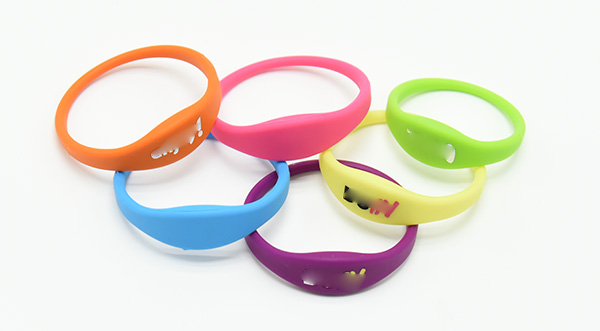
RFID technology is mainly used in various industries for item tracking, identification and data management.In supply chain management and logistics tracking, RFID tags enable real-time inventory monitoring and item movement tracking, improving efficiency and reducing errors. In the retail industry, RFID is used as an anti-theft tool by placing RFID tags on merchandise to effectively prevent theft and enable smart shelf management to optimize inventory.The healthcare industry is also benefiting from RFID technology for tracking medicines and medical devices to ensure safe and timely use of resources. wristbands" target="_blank" style="margin: 0px; padding: 0px; color: rgb(0, 122, 255); text-decoration-line: none;"> wristbands wristbands" target="_blank" style="margin: 0px; padding: 0px; color: rgb(0, 122, 255); text-decoration-line: none;"> wristbands wristbands" target="_blank" style="margin: 0px; padding: 0px; color: rgb(0, 122, 255); text-decoration-line: none;"> wristbands wristbands" target="_blank" style="margin: 0px; padding: 0px; color: rgb(0, 122, 255); text-decoration-line: none;"> wristbandss" target="_blank" style="margin: 0px; padding: 0px; color: rgb(0, 122, 255); text-decoration-line: none;"> RFID wristbands" target="_blank" style="margin: 0px; padding: 0px; color: rgb(0, 122, 255); text-decoration-line: none;"> wristbandss are used in hospitals to identify patients and enhance the safety of the treatment process.In addition, RFID is increasingly being used in traffic management, with automated RFID vehicle identification systems making highway tolling and smart parking management more efficient and convenient.
What is NFC?
NFC, or Near Field Communication, is a short-range high-frequency wireless communication technology that enables contactless, point-to-point data transmission between electronic devices. It is based on the development of RFID technology and usually operates at a frequency of 13.56 MHz, with a communication range of generally within 10 cm. NFC devices can be used as a medium for direct communication between readers, Cards, or devices, supporting fast and convenient data exchange, and are suitable for applications such as mobile payment, e-ticketing, and smart posters.With its high degree of convenience and security, NFC has been widely used in mobile devices such as smartphones and tablets.
NFC technology is mainly used for short-range wireless communication and is widely used in mobile payment, authentication and device pairing. In mobile payment, NFC allows users to make contactless payments using smartphones, watches and other devices, replacing traditional cash and card payments, greatly enhancing convenience and securityIn intelligent access control systems, NFC is used as a means of identity verification, allowing users to verify their identity without physically touching the access control device, which is widely used in offices, residential areas, hotels and other places. In addition, NFC excels in information sharing, allowing users to quickly access product information, advertisements, or interactive content by simply touching an NFC tag or device, enhancing the user experience.NFC is also used in smart home and IoT applications for fast device pairing and control, making daily life smarter and more convenient.
Difference Between NFC and RFID
Uses
RFID technology is generally used for identification. Examples include:
Asset tracking: RFID tags are used to track and manage assets in various industries, from manufacturing to healthcare.
Race timing: RFID chips are embedded in race bibs to accurately track participants' times.
Attendee tracking: RFID badges are used at conferences and events to monitor attendance and access control.
Inventory management:: RFID systems provide real-time inventory tracking to reduce stock-outs and overstocking.
NFC technology is commonly used for communications. Examples include:
Contactless payment: NFC devices allow for secure and convenient contactless transactions.
Information/data sharing: NFC facilitates rapid data exchange between devices, such as sharing contact information or files.
In-store check-ins: Retailers use NFC for loyalty programs and personalized customer experiences.
Post-sale product experiences:NFC tags on products provide additional information or interactive content to enhance customer engagement.
Frequency
RFID can operate in three different frequency ranges, allowing the technology to be adapted for different uses:
Low Frequency (LF): 125-134 kHz with a range of up to 10 centimeters
High Frequency (HF): 13.56 MHz, range up to 30 centimeters
Ultra High Frequency (UHF): 856 MHz to 960 MHz, range up to 100 meters
NFC, a finer subset of RFID, operates in the high frequency (HF) range of the RFID spectrum.
Device Types
RFID devices typically consist of a reader and a tag.The reader actively transmits RF signals while the tag passively receives and returns data.
NFC devices can act as readers, Cards or peer-to-peer communication devices, i.e:
Reader Mode: the NFC device reads data from the NFC tag (e.g. access control card swipe).
Card Mode: the NFC device acts as a passive tag and is read by other devices (e.g. smartphone emulating an access control card or a transportation card).
Peer-to-Peer Mode: two NFC devices exchange data directly (e.g. file transfer between smartphones).
Development of RFID and NFC Technology
With more than 45 billion RFID devices worldwide as of 2025, RFID technology continues to grow rapidly, driving innovation across industries. Future developments will focus on further enhancing the intelligence of RFID tags to not only monitor inventory in real time, but also provide more precise location information, such as the exact location of products in large warehouses or retail stores.
As for NFC, there are currently more than 3 billion NFC devices (e.g. smartphones, wearables, etc.) in use around the world, which means that more than 30% of the world's population has access to NFC technology. With the popularization of mobile payment and smart devices, NFC is becoming an integral part of daily life, further promoting the development of smart home, transportation, payment and other fields.